Ancient Roman history, medieval heritage and European innovation came together in Spain as NARRATIA partners began exploring two pilot sites for future visitor-centred cultural heritage experiences.
How can an ancient Roman city and a historic medieval route inspire new ways of discovering Europe’s cultural heritage?
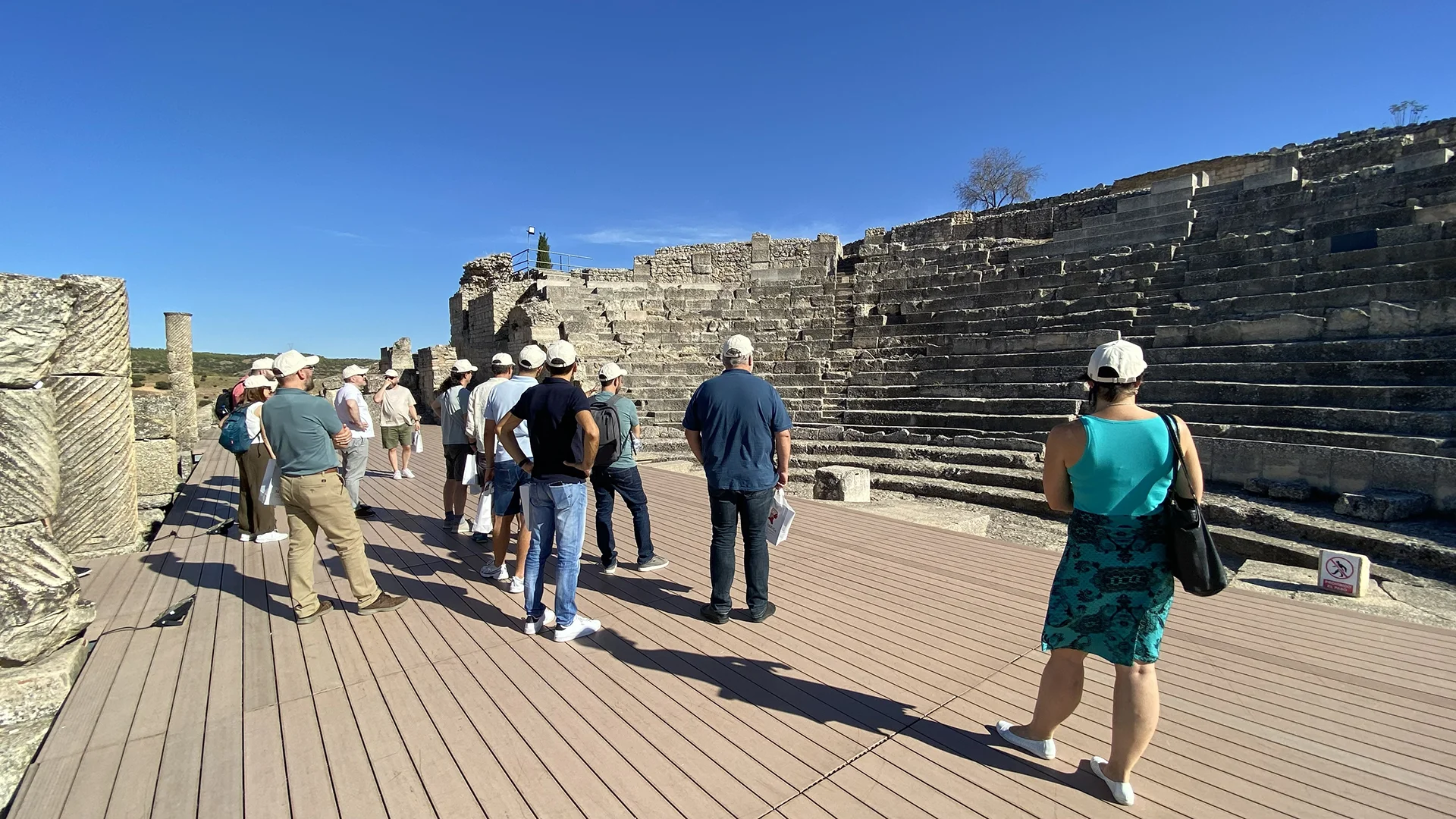
This question brought NARRATIA’s European partners to the Archaeological Park of Segóbriga and the Monastery of Uclés in the province of Cuenca, Spain, on 22 September 2026. Hosted by project partner ADESIMAN, the territorial launch formed part of NARRATIA’s European kick-off meeting, held from 21 to 23 September, and connected local heritage knowledge with European expertise in digital cultural heritage innovation.
The visits marked an early step in shaping two distinct Spanish pilot experiences. By exploring the sites and their historical contexts together, partners began identifying opportunities to make cultural heritage more engaging, understandable and accessible while maintaining historical accuracy and respect for the places and communities involved.
Connecting technology with living heritage
Across Europe, many cultural heritage sites contain rich histories that can be difficult to communicate through conventional interpretation alone. Archaeological remains may require additional context, while historically connected monuments can be spread across different locations.
NARRATIA aims to address these challenges by developing visitor-centred generative narratives that bring historical knowledge, immersive technologies and meaningful visitor participation together.
For NARRATIA, technological innovation must go hand in hand with heritage integrity. The project is developing approaches that combine visitor participation and creative storytelling with historical accuracy, cultural sensitivity and curatorial control.
Two Spanish pilots, two storytelling opportunities
At the Monastery of Uclés, project partners explored the cultural and historical context of the Order of Santiago Route.
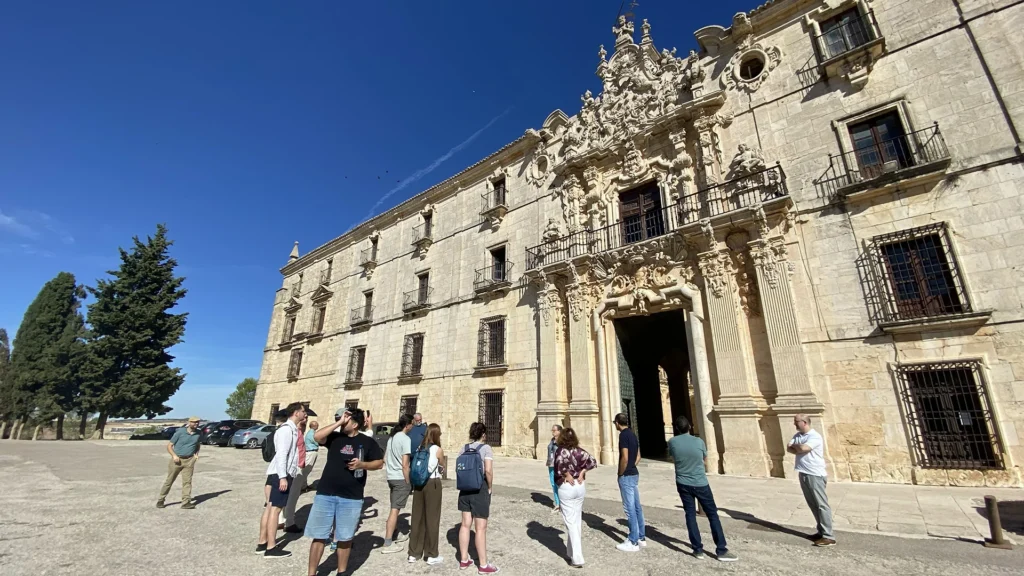
The pilot will investigate how narratives could connect monasteries, castles, churches and communities associated with the Order, helping visitors discover the historical relationships between sites and encouraging exploration of the wider rural territory.
The visit also provided an opportunity to begin considering possible historical characters, narratives, routes and content for future development.
At Segóbriga, the consortium explored how archaeological, historical and epigraphic knowledge about the ancient Roman city could inform more accessible, interactive visitor experiences.
Future storytelling possibilities include exploring everyday life through historically documented people, buildings, objects and events.
In both pilots, the challenge is to transform substantial cultural heritage knowledge into engaging experiences without compromising historical integrity.
The on-site visits provided an important starting point for turning the historical and cultural characteristics of both locations into possible visitor-centred narratives. At Uclés, partners began considering historical characters, routes and storytelling themes connected to the Order of Santiago. At Segóbriga, the discussions explored how archaeological and historical knowledge could inform narratives about the ancient city and its inhabitants. These initial insights provide a foundation for subsequent pilot design, historical content development and collaboration between technical and heritage partners.
Local knowledge meets European innovation
ADESIMAN plays a central role as the territorial partner responsible for the two Spanish demonstrators. Its contribution connects European technology development with local heritage institutions, public authorities, historical expertise and community needs.
Local cooperation was also highlighted during the visit to Segóbriga, where consortium representatives met with the Mayor of Saelices, the municipality in which the archaeological park is located. The Mayor learned about NARRATIA’s planned activities and expressed the municipality’s willingness to collaborate in future work related to the demonstrator. This early institutional engagement highlights the importance of involving local authorities and heritage stakeholders in shaping visitor experiences that respond to the characteristics and priorities of their territory.
By bringing European technology partners together with local heritage stakeholders, the territorial launch helped establish a shared starting point for pilot development. The insights gained from the two sites can inform subsequent work on narrative design, historical content selection, co-creation and visitor testing, ensuring that future technological solutions respond to the particular characteristics and interpretation needs of each heritage environment.
Regional media coverage brings NARRATIA closer to local communities
The territorial launch attracted attention from several local and regional media outlets, bringing NARRATIA’s ambitions for AI-supported cultural heritage experiences to audiences beyond the project consortium.
Cuenca News – “Segóbriga and Uclés become European laboratories for applying artificial intelligence to cultural heritage” highlighted how the two Spanish heritage locations are becoming pilot environments for exploring the possibilities of artificial intelligence in cultural heritage interpretation.
Liberal de Castilla – “ADESIMAN hosts the territorial launch day of the European NARRATIA project in Uclés and Segóbriga” reported on the territorial launch and the project’s ambitions to connect technological innovation with the region’s cultural and historical resources.
The visit was also featured in Tarancón Digital, helping bring the initiative to audiences in the wider local community.
Project partner ADESIMAN published its own account of the territorial launch, documenting the visit and the role of local cooperation in preparing the two Spanish pilots.
Together, these publications provide accessible documentation of the launch and valuable evidence of NARRATIA’s early communication and dissemination activities. They also help make the project discoverable to local communities, cultural heritage professionals and other organisations interested in responsible AI applications for heritage.
From local pilots to European potential
NARRATIA is a Horizon Europe innovation project developing visitor-centred generative narratives and Mixed Reality experiences across six cultural heritage pilots in five European countries.
The Spanish pilots will contribute to exploring how trustworthy AI-supported storytelling can respond to different historical environments, heritage interpretation needs and visitor interests.
As development progresses, insights from Segóbriga and the Order of Santiago Route could help inform approaches that other cultural heritage organisations may adapt.
This ambition also connects with the wider European Collaborative Cloud for Cultural Heritage (ECCCH) ecosystem, where reusable digital knowledge, methods and assets could support future heritage innovation. The territorial launch represents an early but meaningful foundation: bringing European innovation closer to real heritage environments and the people responsible for preserving and interpreting them.