Two NARRATIA partners share their perspectives on how historically grounded storytelling and accessible technology could transform the way people discover Europe’s cultural heritage.
What makes a cultural heritage visit memorable? Is it the history of a place, the stories that bring it to life, or the technology that helps visitors experience it?
For NARRATIA, the answer lies in bringing these elements together.
On 22 September 2026, during the NARRATIA kick-off activities in Spain and the journey to the archaeological site of Segóbriga, Milada Cermakova from PLAN4ALL (https://www.plan4all.eu/) and Aron Rynkiewicz from Poznańskie Centrum Superkomputerowo-Sieciowe (PCSS) (https://www.pcss.pl/) shared two complementary perspectives on the future of visitor-centred cultural heritage experiences.
Their discussions highlighted a shared ambition: making history more engaging, accessible and meaningful while preserving its historical authenticity.
Every heritage site has stories waiting to be discovered
For Milada Cermakova, meaningful digital heritage experiences begin with the knowledge, people and stories connected to a place.
Drawing on her experience with Klatovy, one of NARRATIA’s six European pilot locations, she emphasised the importance of gathering reliable historical information, understanding local heritage and identifying stories that visitors could explore.
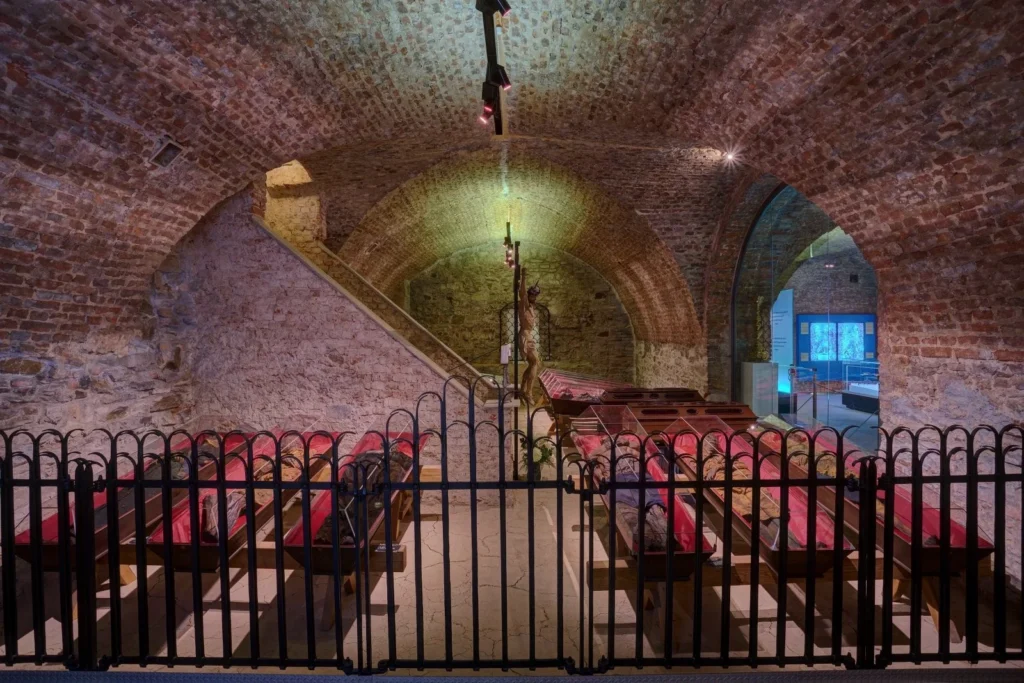
Klatovy’s churches, catacombs and Baroque heritage offer opportunities to connect historical places, events and characters through immersive storytelling.
Existing visitor experiences already include quizzes, QR-based information and some virtual reality applications. NARRATIA aims to explore how generative AI storytelling and gamification could take this further.
One particularly interesting possibility is connecting multiple heritage locations through a shared narrative.
Instead of experiencing monuments as separate attractions, visitors could gradually discover connections between places and historical events — almost like solving a puzzle.
The opportunity is to make learning part of the experience itself, encouraging curiosity and exploration rather than simply presenting historical information.
Making heritage accessible through technology
Aron Rynkiewicz from PCSS approached the challenge through AI, knowledge structures and the practical needs of visitors.
He recalled visiting a museum where information about artefacts was available only in German. Although the objects were visible, their meaning was much harder to understand without knowing the language.
This familiar challenge illustrates why accessibility matters in digital heritage.
NARRATIA is being developed to explore how personalised, AI-supported narratives could make cultural heritage easier to experience across languages, interests and different visitor needs.
However, Aron also highlighted an important consideration: the most advanced technology is not always the most accessible.
Mixed Reality and VR headsets can offer immersive possibilities, but cost, comfort, battery life and usability may limit their adoption.
Smartphones and web-based experiences could offer alternative ways of reaching visitors.
Finding the right balance between immersion, accessibility and practical deployment will be an important part of NARRATIA’s development and testing.
Where storytelling and technology meet
Although Milada and Aron approached the topic from different directions, their perspectives converge on one central principle:
Technology should serve the story — and both should serve the visitor.
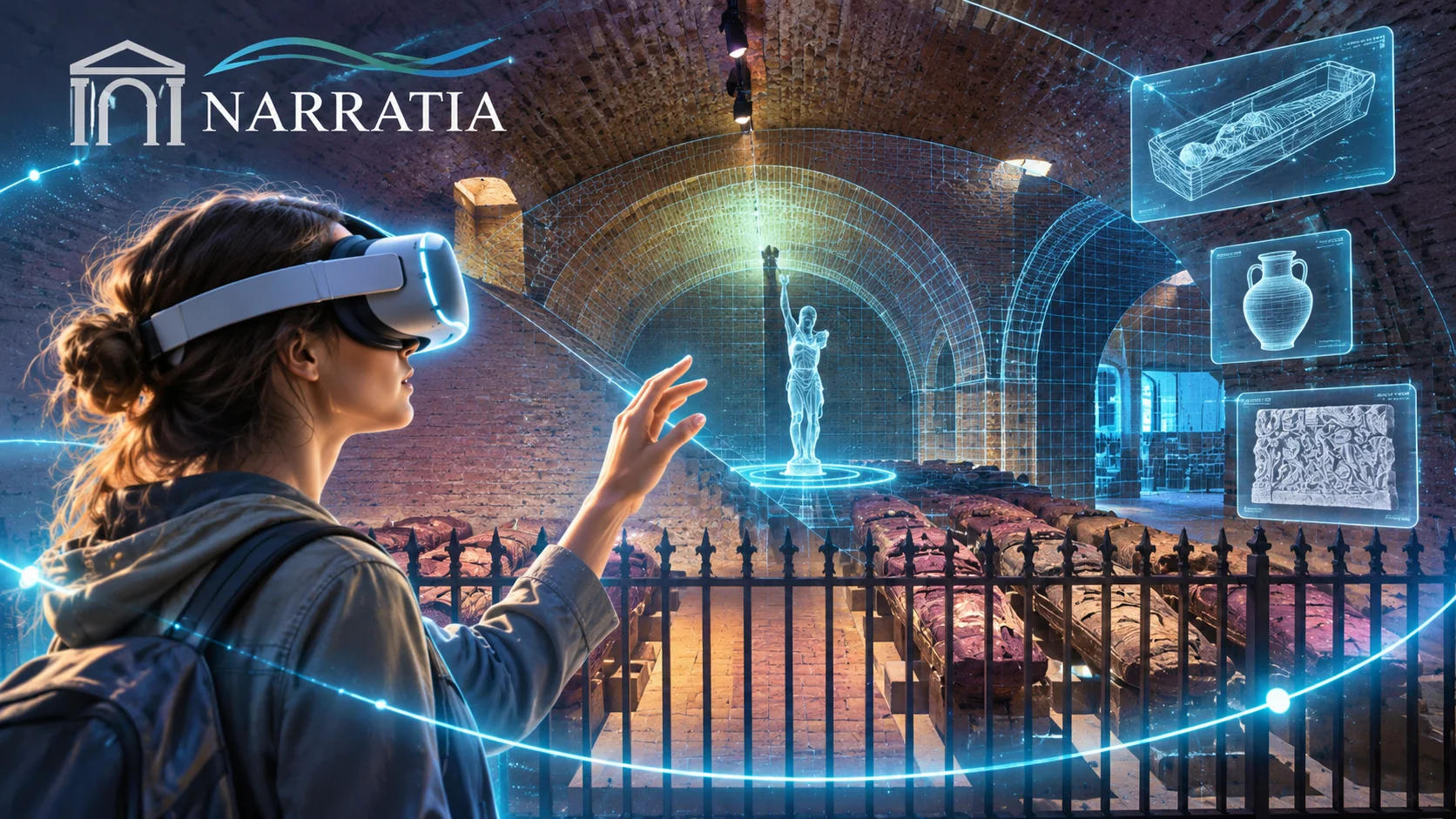
NARRATIA aims to combine generative AI, Mixed Reality and visitor-centred storytelling to create interactive heritage experiences in which visitors can influence how narratives unfold.
Importantly, the project is not designed to let AI freely invent history.
Its planned approach combines curator-validated historical knowledge with narrative governance and real-time orchestration, helping ensure that experiences remain historically grounded, culturally sensitive and ethically responsible.
This balance between creative participation and trustworthy interpretation is central to NARRATIA’s vision.
From early insights to real-world experiences
The conversations with Milada and Aron provide early partner insights that can inform the project’s ongoing development.
NARRATIA will develop and test its approach through six cultural heritage pilots across five European countries, including Klatovy in Czechia and Segóbriga in Spain.
The pilots will help investigate how visitors engage with interactive stories, how accessibility can be supported, and which technologies are most suitable for different heritage environments.
Future results could also support museums, educators, creative industries and the wider European Collaborative Cloud for Cultural Heritage (ECCCH) ecosystem through reusable digital heritage approaches and assets.
These benefits remain ambitions to be investigated and validated, rather than demonstrated project outcomes.
The interviews already offer a valuable guiding insight: meaningful cultural heritage innovation begins with understanding the places, the stories and, above all, the people who experience them.
Because bringing history to life is not simply about recreating the past. It is about helping people connect with it